Meerkat
Suricata suricatta.
Meerkat
Meerkats live on the African continent in dry hot sandy deserts. The meerkat occurs in southwestern Botswana, western and southern Namibia, northern and western South Africa. Meerkats are enormously resourceful, good at avoiding predators, and too small to be targeted by poachers. And when your home is inhospitable to humans, loss of habitat is a non-issue.
Meerkats are amazing diggers with long front claws. They dig deep underground burrows up to 5 meters long with around 15 entry holes and a network of tunnels.
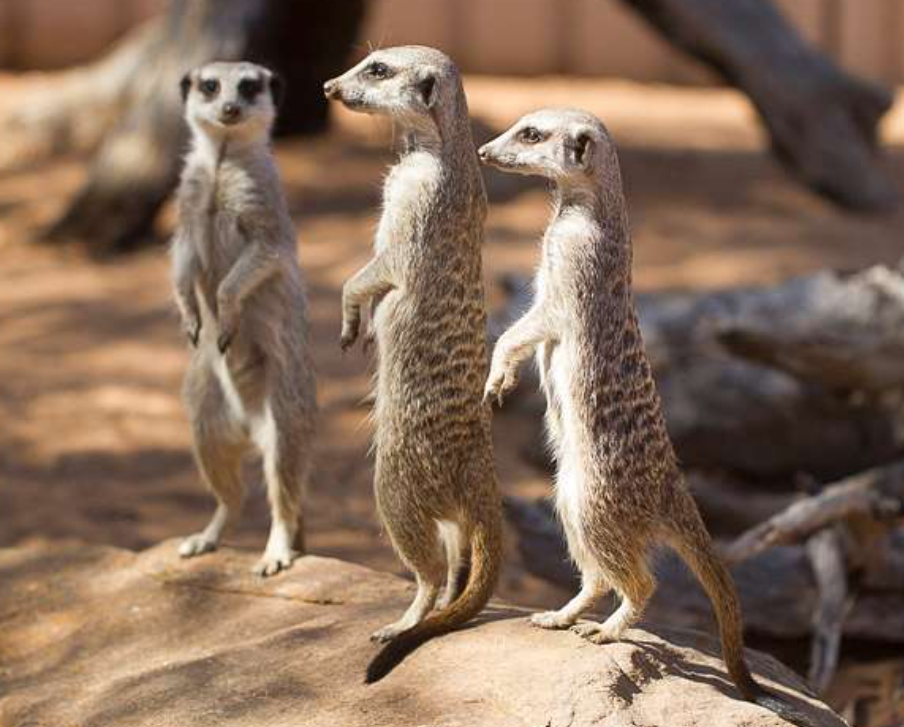
The meerkat is a social mammal, forming packs of two to 30 individuals each comprising nearly equal numbers of either sex and multiple family units of pairs and their offspring. Members of a pack take turns at jobs such as looking after pups and keeping a lookout for predators.
Meerkats are insectivorous (mainly insect eaters) but do also eat small animals and some plants.
Meerkats are estimated to survive for 5-15 years in the wild, usually 12-14 years in captivity due to protection from predators when young; the maximum lifespan recorded in captivity is just over 20 years!
Fun Facts
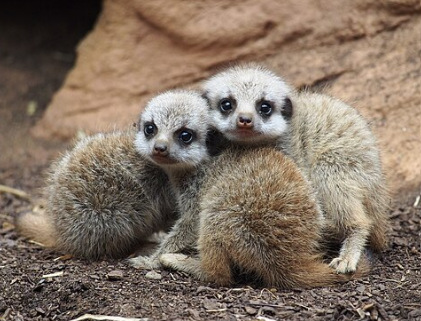
- A young meerkat is called a meerkitten!
- Meerkats have complex language with many different sounds each with specific meanings, much like human ‘words’.
- The black around meerkats’ deep-set eyes works like sunglasses to help them see in bright sunlight.